


美容外科・美容皮膚科・形成外科
東京・千葉






Is Botox Effective for Axillary Bromhidrosis?
更新日:2023/10/30
公開日:2023/10/30
Axillary bromhidrosis refers to body odor resulting from sweat produced by specific sweat glands, particularly the apocrine glands. Let’s delve into the function of apocrine glands and explore Botox, a treatment option that has been gaining attention.
Difference between Eccrine and Apocrine
Glands Our bodies have two main types of sweat glands: eccrine and apocrine glands. They secrete eccrine sweat and apocrine sweat, respectively. Eccrine glands are found throughout the body and secrete sweat to regulate body temperature. Apocrine glands, on the other hand, are located in specific areas such as the armpits and groin, and become active during puberty. Both types of glands are controlled by the sympathetic nervous system, though they respond to different neurotransmitters. Eccrine glands are activated by acetylcholine, while apocrine glands respond to catecholamines.
What is Botox?
Botox is a product that primarily consists of botulinum toxin A, produced by the bacterium Clostridium botulinum. Botox works by inhibiting the release of neurotransmitters, particularly blocking the release of acetylcholine.
Understanding Catecholamines and Acetylcholine
Imagine participating in a relay race, passing a baton between teammates. When you pass the baton, you transfer momentum from your hand to your teammate’s. This act of passing the baton is analogous to how neurotransmitters work in neuronal communication. Acetylcholine, the neurotransmitter, is primarily used by neurons controlling eccrine glands. Botox disrupts this transmission, inhibiting eccrine gland activity. On the other hand, apocrine glands respond to a different neurotransmitter, catecholamines. Botox does not directly affect this transmission.
Application of Botox in Treating
Axillary Bromhidrosis Considering Botox’s mechanism of action, it is expected to suppress eccrine gland activity. Indeed, Botox is widely used for treating hyperhidrosis, with proven efficacy. However, since apocrine bromhidrosis is mainly caused by apocrine glands, which are controlled by catecholamines and not acetylcholine, Botox is not expected to have a direct inhibitory effect on these glands.
So, is Botox Ineffective for Axillary Bromhidrosis?
Apocrine sweat itself does not have an odor. The odor arises when N-acetyl-5-methyloornithine in the apocrine sweat, combined with fatty acids secreted by sebaceous glands, is broken down by resident bacteria (such as Corynebacterium) on moist skin. A moist environment encourages bacterial proliferation, intensifying the odor. By suppressing eccrine sweat with Botox, the skin’s moist environment improves, potentially reducing bacterial growth and subsequently alleviating the “axillary odor.”
Conclusion
While Botox is effective in suppressing eccrine gland activity and treating hyperhidrosis, it is not expected to have a direct effect on apocrine bromhidrosis. However, since sweating can contribute to odor, suppressing hyperhidrosis with Botox can have a beneficial effect, depending on the severity and cause of the axillary bromhidrosis. Thus, when considering Botox for axillary bromhidrosis treatment, it is crucial to consult with a specialist to ensure the selection of an appropriate treatment method.


Related Posts
関連記事




















当院は開設20年以上の歴史を持つ医療法人社団セレスのグループクリニックです。
千葉船橋院:千葉県船橋市(JR総武線・横須賀総武快速線、東武野田線、京成本線船橋駅)、東京青山院:東京都港区北青山(地下鉄銀座線外苑前駅)がございます。
年間で累計約4万人の患者様にご来院いただいており、国内屈指の症例数がございます。
様々な治療のご相談をお受けし、施術を行っておりますのでどうぞ安心してお任せください。
千葉エリアで治療をご希望の方はこちら
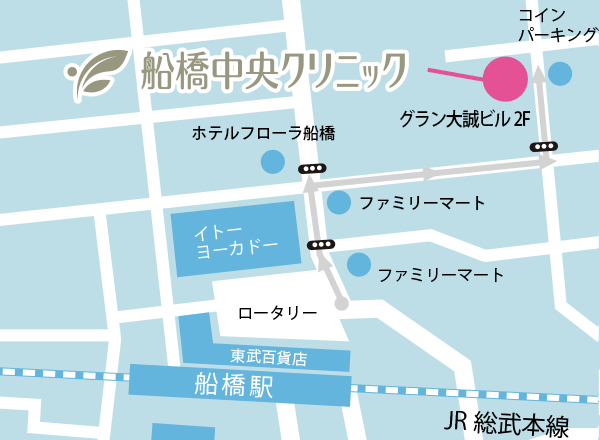
〒273-0005
千葉県船橋市本町6-4-15
グラン大誠ビル 2F
責任者:元神賢太
最終学歴:H11年慶応義塾大学医学部卒業
勤務歴:H15年船橋中央クリニック開業
東京エリアで治療をご希望の方はこちら
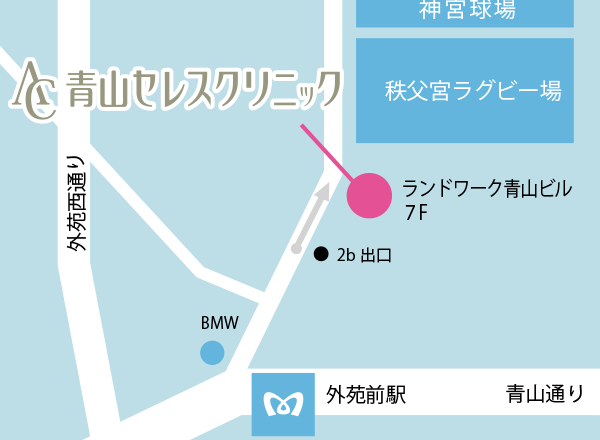
〒107-0061
東京都港区北青山2-7-26
ランドワーク青山ビル7F
(旧ヒューリック外苑前ビル)
責任者:高林洋一
最終学歴:S43年慶応義塾大学医学部卒業
勤務歴:H28年青山セレスクリニック管理者